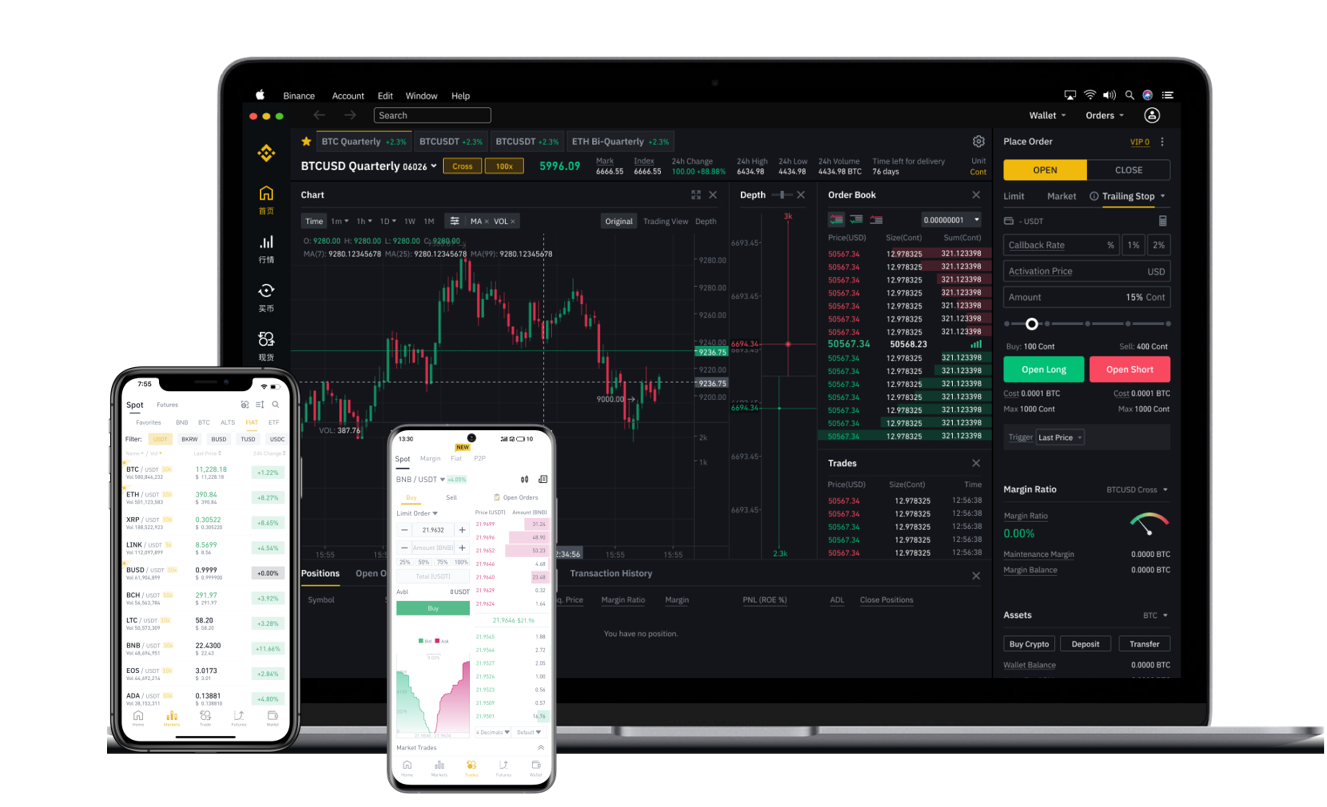
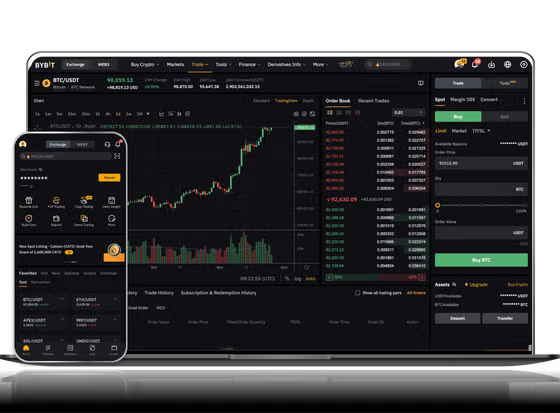

Binance leverage trading has become one of the most popular tools for cryptocurrency traders looking to amplify their positions. When you engage in a leverage trade on Binance, the "sell" function plays a critical role, whether you are closing a long position or opening a short. Understanding how to execute a sell order in a leveraged environment is essential to managing risk and maximizing profits.
On Binance, leverage allows you to borrow funds to increase the size of your trade. For example, with 5x leverage, a $100 margin gives you a $500 trading position. When you decide to sell, it is not simply a matter of clicking a button. You must consider your liquidation price, margin ratio, and the current market depth. A sell order in leverage trading can be a "market sell" for immediate execution or a "limit sell" to target a specific price. The choice depends on your strategy and market conditions.
One common mistake traders make is ignoring the liquidation price when selling. If the market moves against your position, your assets may be automatically sold by the exchange to cover the loan. This is why setting a stop-loss sell order is crucial. Binance offers features like "Take Profit/Stop Loss" orders to help you manage your exits automatically. Without these, a sudden price drop could lead to a complete loss of your margin.
Another key aspect is the funding rate for perpetual contracts. When holding a leveraged short position (selling first with the expectation of buying back later at a lower price), the funding rate can eat into your profits. If the rate is positive, shorts pay longs. So, timing your sell entry and exit to avoid high funding charges is a smart move. Many professional traders monitor this rate before placing a large sell order.
Risk management should always be your priority. Never use more leverage than you can afford to lose. A common rule is to keep your position size below 10% of your total portfolio. Also, avoid trading during major news events or low liquidity periods, as slippage on sell orders can be severe. Binance provides a "reduce-only" order type for short positions, which ensures you only sell to decrease your position size, preventing accidental over-leverage.
To improve your sell execution, regularly check the order book depth. If the sell wall is thin, a large market sell can cause a temporary price dump, resulting in a worse fill price. In such cases, using multiple limit sell orders at different price levels can help you exit more efficiently. This is called "scaling out" and is a widely used tactic among experienced leveraged traders on Binance.
Finally, keep your emotions in check. The high volatility of crypto markets combined with leverage can lead to panic selling or holding too long. Stick to your trading plan. If your analysis has a clear sell target, execute it without hesitation. Many traders use the "one-cancels-the-other" (OCO) order to place a take-profit and stop-loss simultaneously, ensuring they capture gains while limiting downside.
In summary, selling on Binance leverage trading is not just about clicking "sell". It requires a deep understanding of liquidation mechanics, funding rates, order types, and market depth. By mastering these elements, you can trade with more confidence and control. Always prioritize capital preservation over chasing high returns. Whether you are a beginner or a seasoned trader, refining your sell strategy is a continuous process that directly impacts your long-term success in the crypto market.